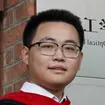
About
- I am currently a Research Assistant at Wave Intelligence Lab, Department of Computer Science and Engineering, The Chinese University of Hong Kong, where I have been working with Prof. Shengchao Liu since June 2025.
- From July 2025 to Oct. 2025, I was a visiting student at Hefei Institutes of Physical Science, Chinese Academy of Sciences, hosted by Prof. Jianhui Zhou.
- I received my Bachelor of Science degree from the School of Physics, Sun Yat-sen University, in June 2025. During my undergraduate studies, I was a member of the PMI Lab and was advised by Prof. Haiping Huang from Oct. 2022 to June 2025.
Interests
My research interests lie at the intersection of artificial intelligence, statistical physics, and complex systems. I am particularly interested in understanding the theoretical mechanisms of large language models, generative models, and deep learning. Methodologically, I use tools from statistical mechanics, spin-glass theory, random matrix theory, dynamical mean-field theory, nonlinear dynamics. I am also developing a broad interest in AI for science.
News
| 2026-01-19 | I formally joined the Wave Intelligence Lab at CUHK as a Research Assistant. |
| 2025-06-20 | I received my B.S. degree in Physics from Sun Yat-sen University. |
| 2025-05-21 | My undergraduate thesis was awarded the Excellent Undergraduate Thesis of Sun Yat-sen University. |
Publications
* denotes equal contribution
On Distinguishing Capability Elicitation from Capability Creation in Post-Training: A Free-Energy Perspective
Yuhao Li, Shengchao Liu
Submitted to NeurIPS 2026. [arxiv]Base-and-Sugar Dual-Frame Flow Matching for RNA Co-Design
Junzhe Li, Lijian Peng, Yuhao Li, Yize Zhou, Hanqun Cao, Cheng Tan, Shengchao Liu
Submitted to NeurIPS 2026. [ICML 2026 Workshop GenBio]Spatiotemporal Perceptron with Positional Encoding: A State-Space Perspective
Tianyi Shi, Hanqun Cao, Yuhao Li, Pheng-Ann Heng, Weitao Du, Shengchao Liu
Submitted to NeurIPS 2026.A Minimal Model of Representation Collapse: Frustration, Stop-Gradient, and Dynamics
Louie Hong Yao*, Yuhao Li*, Shengchao Liu
Under review at Phys. Rev. E. [arxiv]Learning Mechanism and Phase Transitions of Triplet Loss for Contrastive Learning
Yixiong Ren, Yuhao Li, Jianhui Zhou
Under review at Phys. Rev. E.Spin Glass Model of In-Context Learning
Yuhao Li, Ruoran Bai, and Haiping Huang
Phys. Rev. E 112, L013301, 2025. [arXiv]